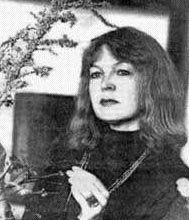
Tamara Yufa (1937–2022) was a Russian artist and book illustrator.
She was born in the Lipetsk region and graduated from the Leningrad Art Pedagogical College. After completing her studies, she taught drafting and drawing at a school in the поселок of Ladva; at that time she created her first illustrations for the epic Kalevala. In 1964 she moved to Petrozavodsk and in 2009 was named an honorary citizen of the city.
Yufa has illustrated numerous books, primarily for the Karelia publishing house. Among them are The Tale of the Dead Princess and the Seven Knights by Alexander Pushkin, as well as fairy tales by Hans Christian Andersen, Zacharias Topelius, and Charles Perrault. In addition to book illustration, she has worked successfully as a theatre designer, creating costume and stage set sketches.
“I say about myself that I come from the nineteenth century. After the Decembrist uprising I was no longer there, but before that I lived. I like everything about that time — unlike today. Since childhood I had a sharply developed sense of beauty. I always noticed which woman was beautiful and which was not. Love is the most important feeling in my life. As long as I can remember, from early childhood, I was always in love with someone.”
“I don’t even know how I draw. Sometimes a painting moves very far from the original idea, as if the hand leads itself. For me, drawing is as natural as seeing or speaking — it’s hard to explain. Sometimes you look at a finished work and suddenly wonder: where did all this come from?”
“The problem with many painters today, in my view, is the lack of a solid professional school, serious education, and intellectual depth. One can break established rules and experiment only when there is a strong technical foundation in drawing. Let us remember that the avant-garde artist Pablo Picasso had an excellent classical training; he mastered not only abstraction but also realistic perception.”
“I have no students. You can teach technique — how to draw from life correctly and precisely. But you cannot fill someone with a worldview; it lives in the heart. It is the quintessence of what I have read, whom I have met, in which gardens I have wandered, which sunsets I have admired, in what rivers I have bathed at night… How could that be passed on?”
“When my first books with my illustrations were published, I cried. The poor paper did not convey the colors; the fine lines blurred. I was offered commissions to paint portraits of political leaders. They would say: ‘Is it really so hard for you to draw Lenin?’ But I couldn’t. They suggested: draw a woman — a socialist labor champion in work clothes at a machine. And I saw her in a lace dress, with happy eyes.”
“I very much wanted to design books. I came to the publishing house with a folder of drawings — I had drawn a lot while continuing my studies in Leningrad. I thought they would tell me to go away. I believed that only academy graduates could illustrate books. They looked through my folder and said, ‘We will call the chairman of the Union of Artists.’ I didn’t know anyone yet. They called Sulo Juntunen. He came, looked, smiled, and said: ‘You know what? Your drawings have given me great pleasure. You should illustrate the Kalevala.’ I said, ‘Can I really? It’s such a serious work!’ He replied, ‘Just begin.’ And I began…”
“Tamara Yufa and Karelia: in the minds of many these words have become inseparable — almost synonymous. Tamara Yufa is the soul of Karelia. This is not a metaphor but a reality: to paint landscapes like that, one must experience them from within, feel oneself as stone, as water, as plant. The gift of such transformation, once possessed by our ancestors, has been lost by civilization. But Tamara Yufa has fully restored it and reveals it in her paintings.” — Yuri Linnik