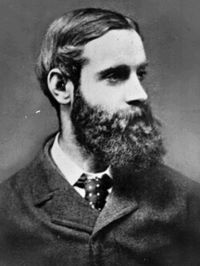
Randolph Caldecott (1846–1886) was a British artist and illustrator, after whom one of the most prestigious American awards in children’s illustrated literature — the Caldecott Medal — was established in 1938.
Caldecott worked primarily as a book illustrator and had a major influence on the development of children’s picture books in the 19th century. In addition to children’s books, he illustrated novels and popular travel accounts, drew caricatures and sketches — including scenes from life at Westminster Palace — and created humorous drawings on a wide range of contemporary subjects. His sculptures and paintings, both in oil and watercolor, were exhibited at the Royal Academy and other galleries.
He was born in Chester, the son of accountant John Caldecott, and studied at The King’s School. From an early age he was drawn to art, cutting animals and rural scenes out of paper. At fifteen, after finishing school, he began working in a bank. In 1861, one of his drawings was published in the Illustrated London News. Six years later he moved to Manchester, where the bank’s head office was located, and began attending evening classes at the Manchester School of Art. In 1870, through his friend, the artist Thomas Armstrong, he was introduced to the publisher of London Society, a prominent magazine that went on to publish many of his works.
After collaborating with London Society for two years, Caldecott moved to London, where he made a living as an illustrator for newspapers and periodicals. There he studied at the Slade School of Fine Art and attended the studio of the sculptor Jules Dalou. In 1877, at the suggestion of the printer Edmund Evans, he turned to illustrating children’s books — work he continued successfully until his death in 1886, just over a month before his fortieth birthday.
Amazon | Randolph Caldecott
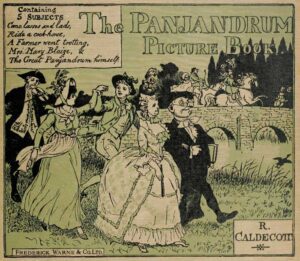
At the end of the 19th century, Randolph Caldecott changed how picture books worked. Instead of treating illustrations as decoration, he made them part of the storytelling itself — adding movement, timing, and humor that the text alone doesn’t carry. This approach became a turning point for children’s books. The […]