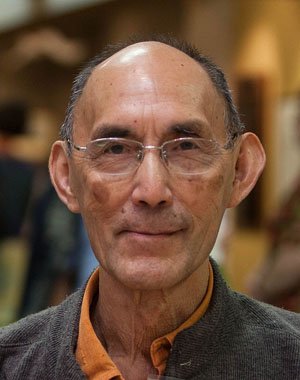
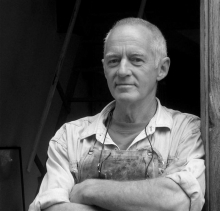
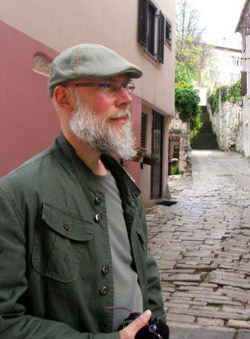
Ed Young (1931–2023) was an American author and illustrator of children’s books, twice nominated for the Hans Christian Andersen Award. In 1990, he received the Caldecott Medal for Lon Po Po: A Red-Riding Hood Story from China.
Young was born in Tianjin, China, and moved with his family to Shanghai when he was three. He drew constantly as a child and invented stories; in one interview, he recalled imagining himself slipping into the characters he sketched and disappearing from the real world into the one he created.
In 1951, Young moved to the United States to study architecture, but soon changed direction and became an illustrator. He worked at a New York advertising agency and spent his lunch breaks sketching animals in Central Park. Over time he realized that “to fully explore my potential as an artist, I must value myself as a human being. True success comes only from work that inspires others to live with harmony and happiness.” Searching for something expansive, expressive, and timeless, Young turned to children’s books—an art form that became his lifelong calling.
His first book, The Mean Mouse and Other Mean Stories (1962), received an award from the American Institute of Graphic Arts. Though he initially thought it would be his only work in the field, the book launched a long and successful career. Young eventually created more than eighty children’s books, using a wide range of materials and techniques: pencil, pastel, paper, ink, photography, and many others.
“A Chinese painting is often accompanied by words,” explains Young. “They are complementary. There are things that words do that pictures never can, and likewise, there are images that words can never describe.”
Website | edyoungart.com
Amazon | Ed Young
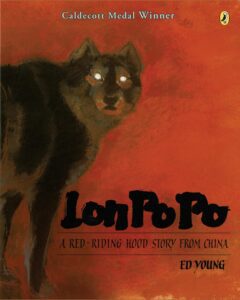
In this Caldecott-winning book, Ed Young works simultaneously as author and illustrator, offering his own retelling of the traditional Chinese “Granny Wolf” story — a tale that shares roots with the European Little Red Riding Hood but unfolds with different dynamics. Instead of one child walking through a forest, Young […]