Author: Sámi folklore
Illustrator: Valery Tsikota
Year: 1990
Publisher: Murmansk Publisher
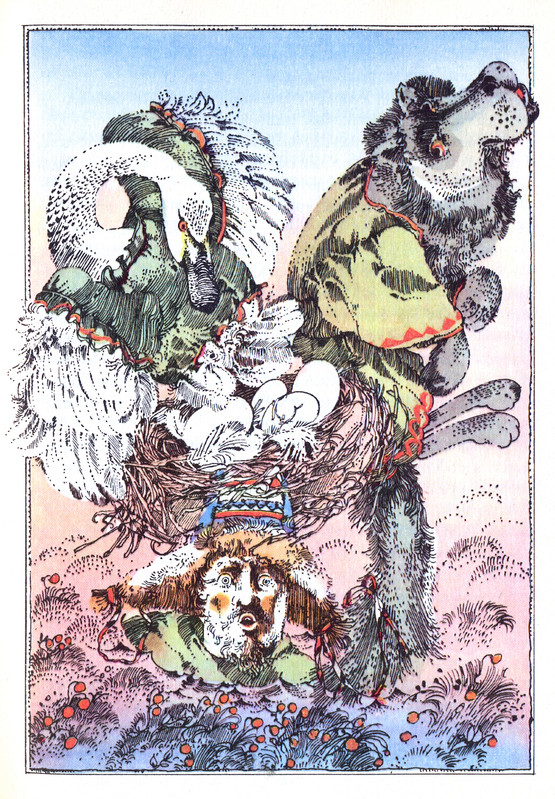
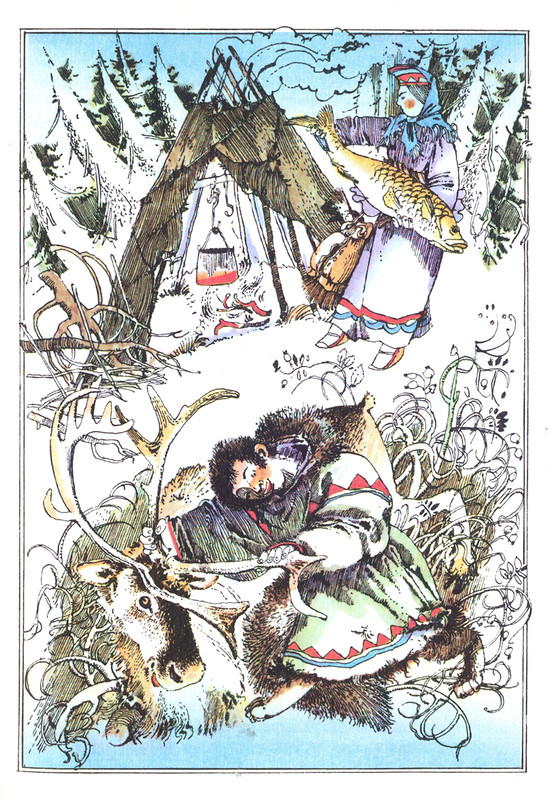
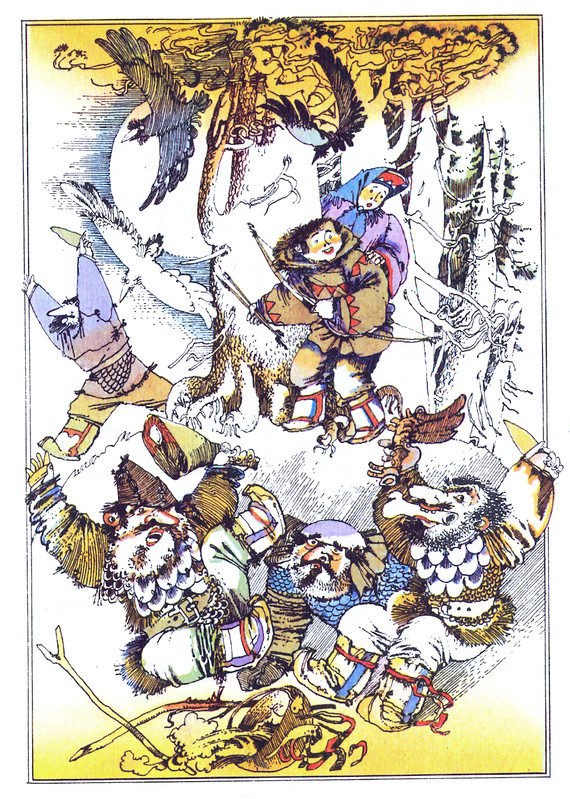
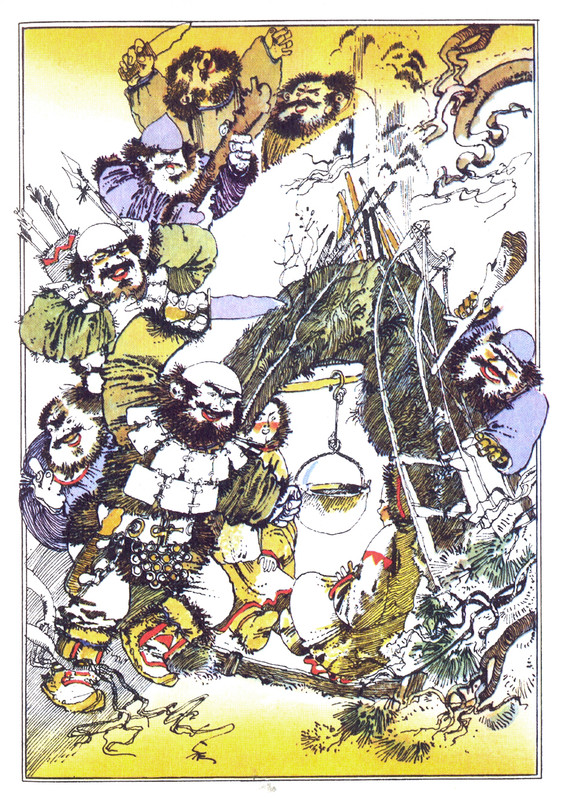
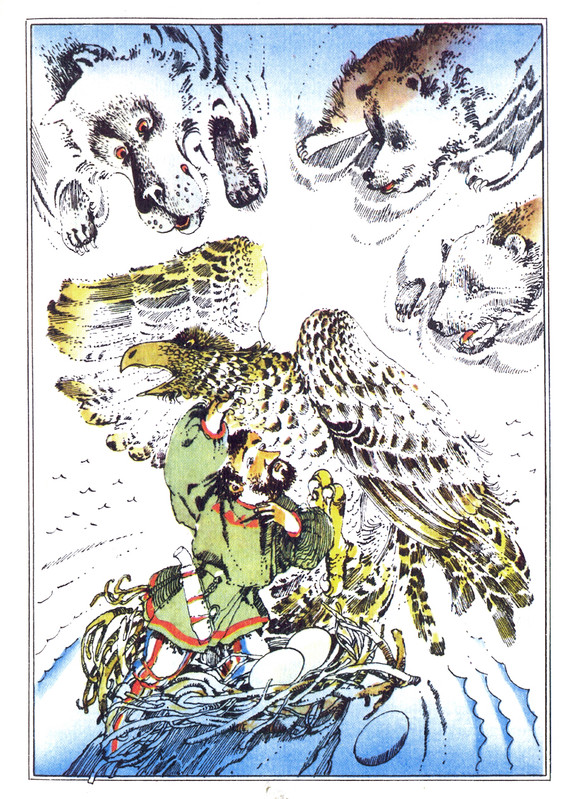
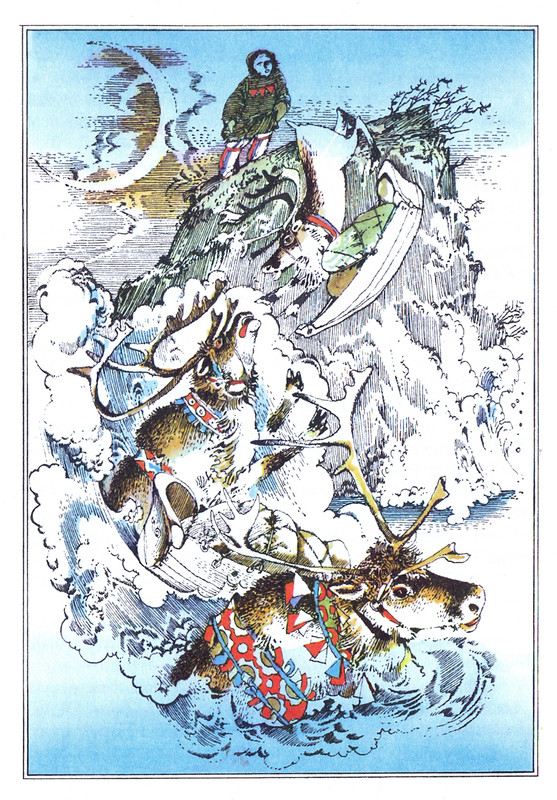
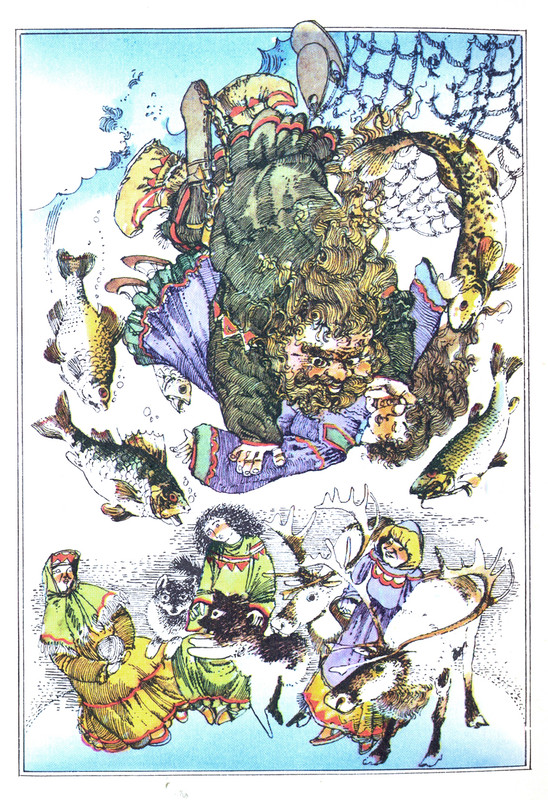
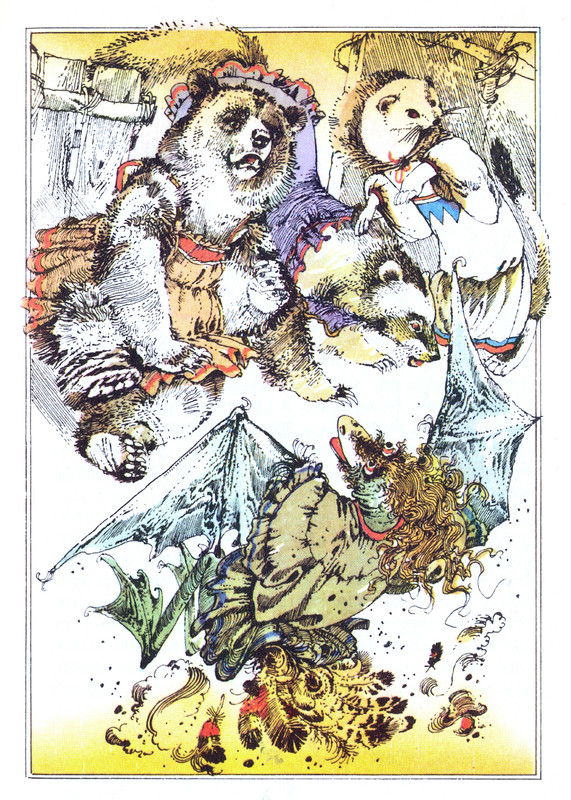
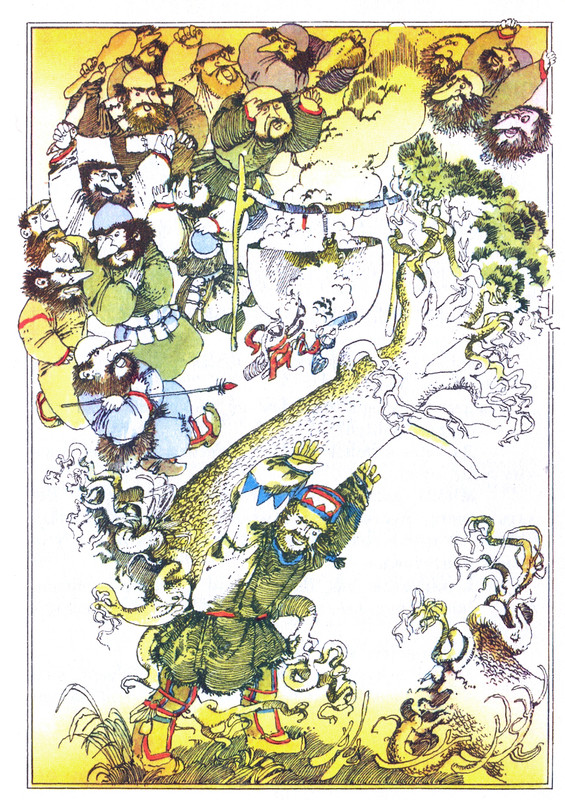
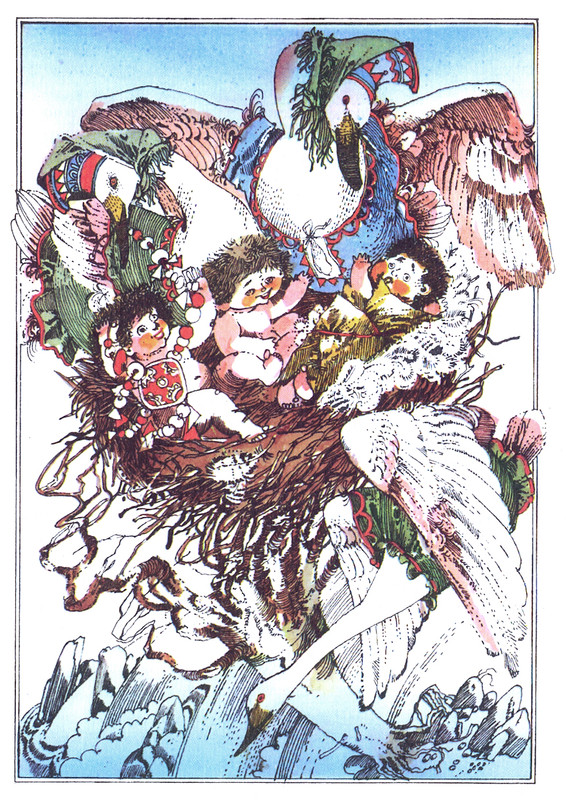
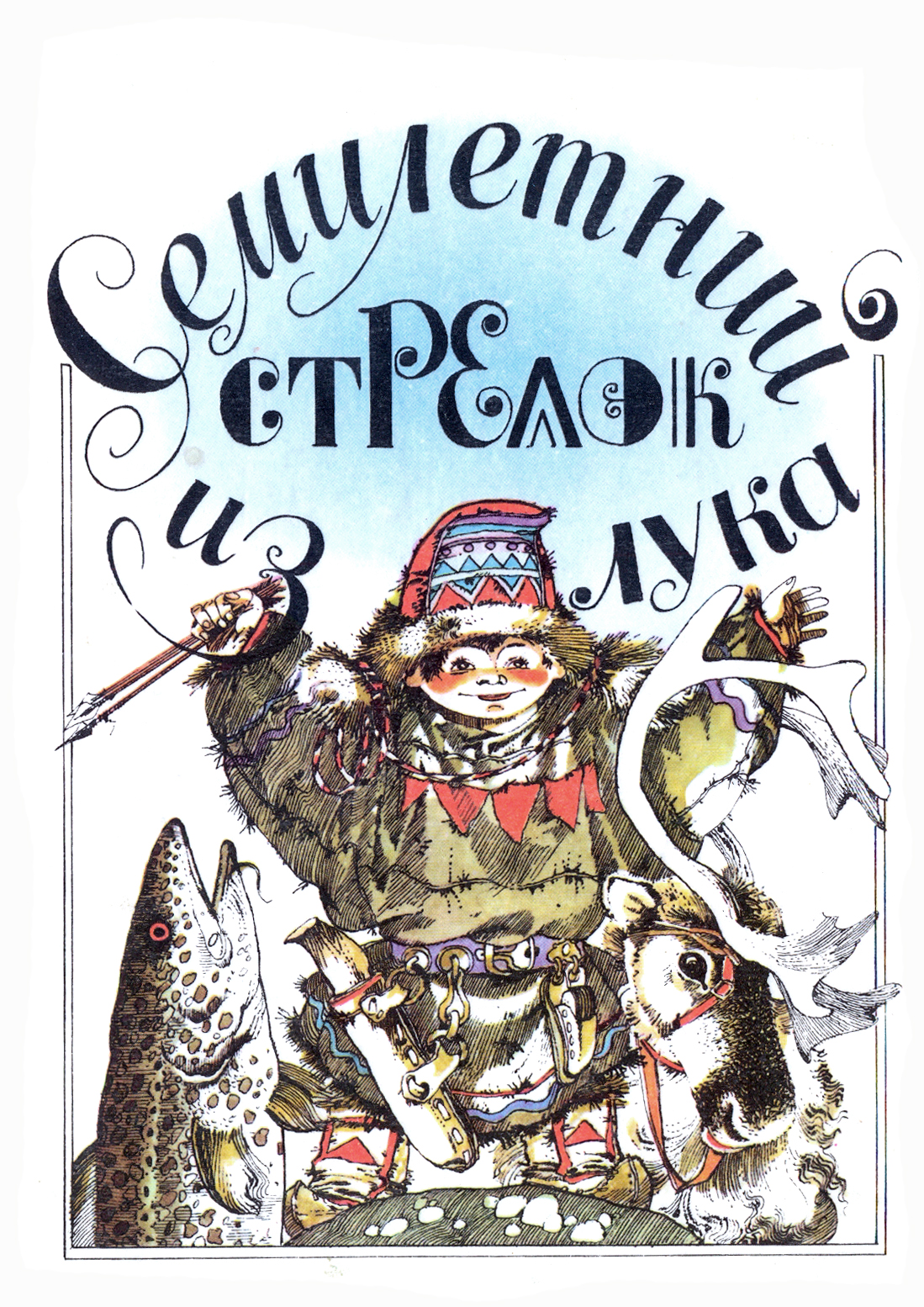 The collection of Sámi folktales Seven-Year-Old Archer was published in 1990 by the Murmansk publishing house. The book contains twenty-six traditional stories. Although the illustrations differ slightly in color and style from some of Tsikota’s other works, his unmistakable artistic voice remains — once you have seen Tsikota’s drawings, they are hard to confuse with anyone else’s.
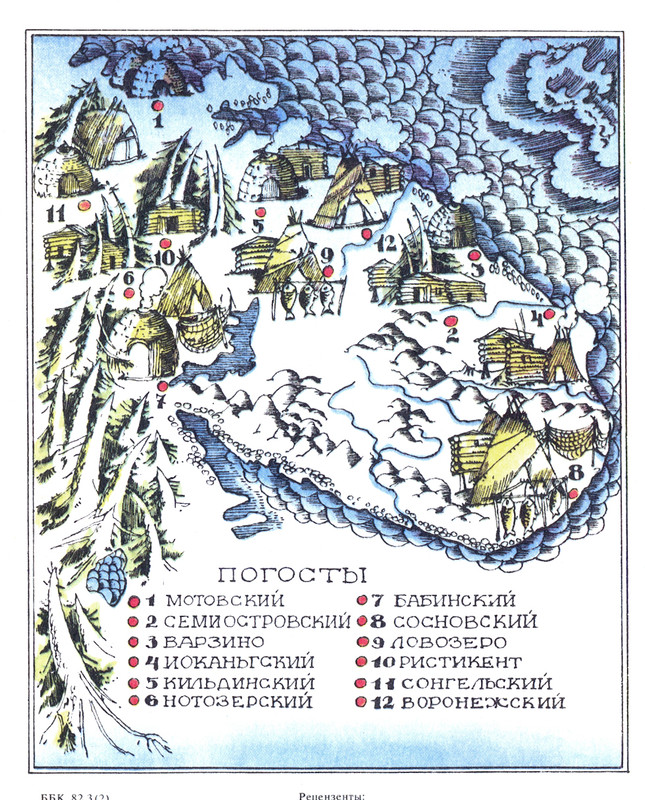
The volume opens with a short introduction about the Sámi people and the features of their traditional life and culture. It explains, for example, that most Sámi today live in the central part of the Kola Peninsula and that reindeer herding remains their main occupation. Their settlements are small villages called pogosts, and Tsikota depicts a stylized map of these places in the very first illustration, even adding their names — Motovsky, Iokangsky, Notozersky, and others.
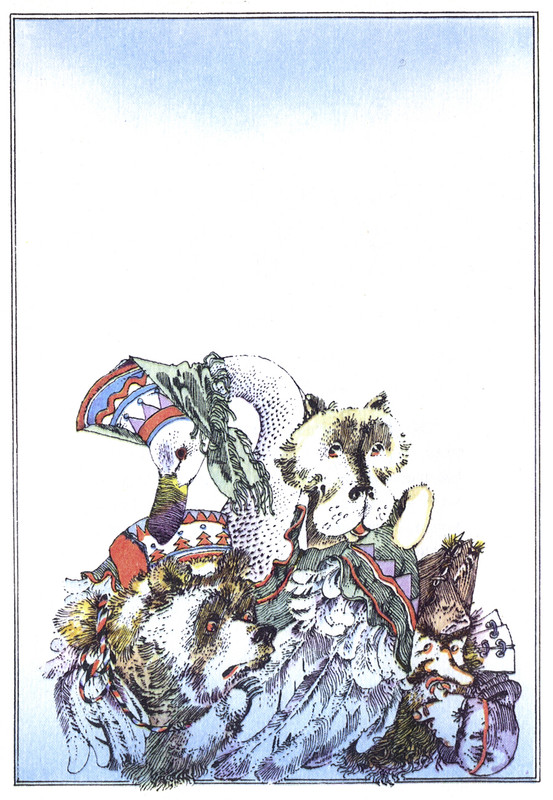
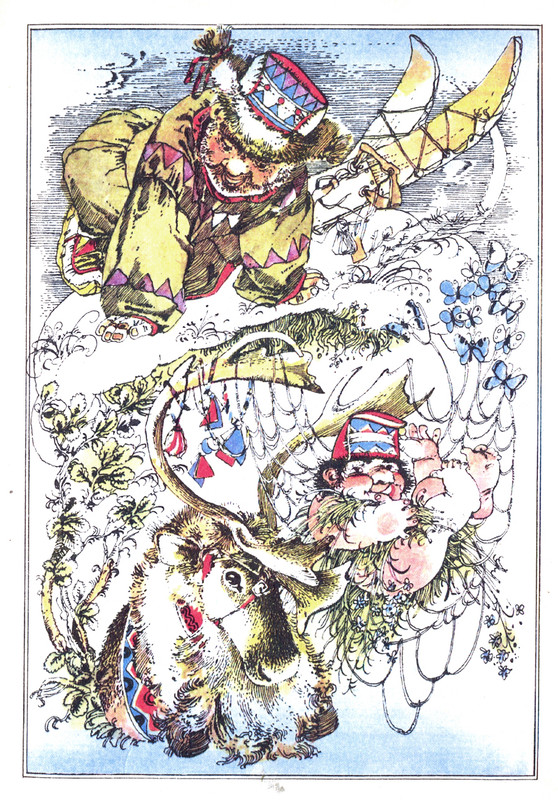
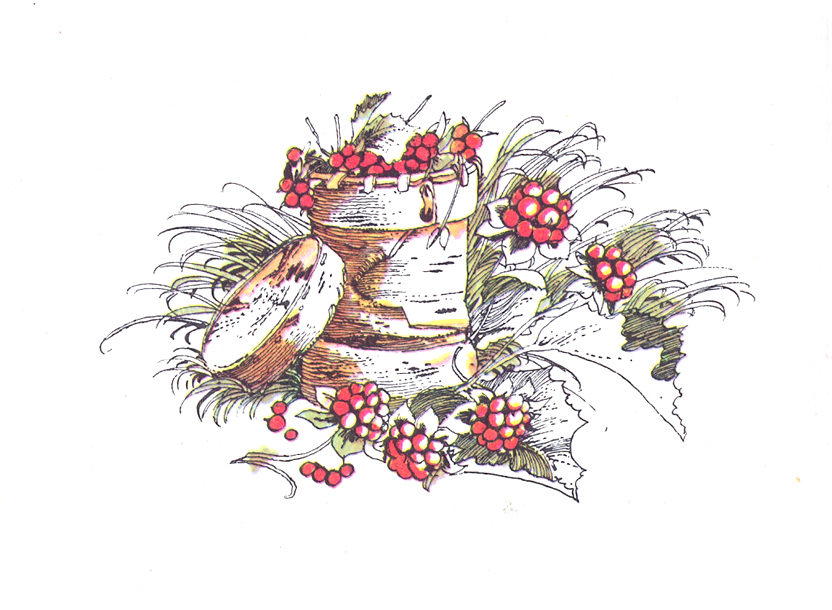
The tales themselves were adapted by Evgeniya Patsiya and read easily, almost in one breath. Tsikota’s illustrations — layered, graphic, lightly touched with color and seemingly dusted with snow — weave naturally into the narrative and create a quiet northern atmosphere.
Valery Tsikota died relatively young, a little over fifty years old. On the website dedicated to his work one can read memories written by his friends, including well-known artists such as Valery Traugot, Alexander Azemsha, and Nikita Andreev.
Here is how Vadim Zartaysky, editor-in-chief of the St. Petersburg publishing house Vita Nova, wrote about him:
“Valery Tsikota managed to create a unique atmosphere that belonged only to him — the atmosphere of a cheerful and trusting conversation. The accuracy with which he conveys historical realities, combined with the ease of his graphic improvisations, turns a journey through the pages of the books he illustrated into a truly engaging expedition into the past. In Tsikota’s work, his free command of drawing impresses every attentive viewer. His illustrations reveal not only extraordinary talent and mastery, great erudition, and the high artistic culture of the St. Petersburg school of book graphics. They also show remarkable diligence, an open and generous view of the world, and a deep respect for the reader.”