Author: Aleksandr Deyneka
Illustrator: Aleksandr Deyneka
Year: 1930
Publisher: GIZ
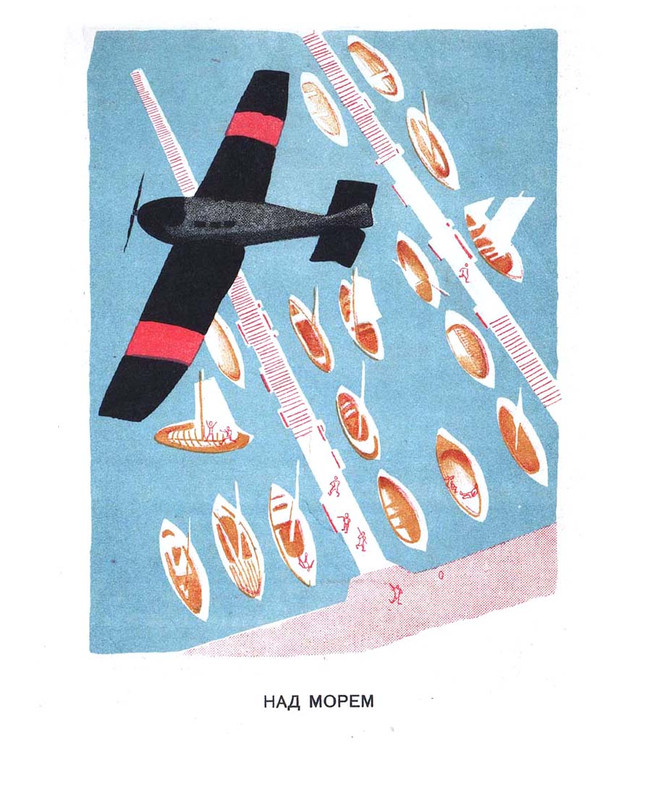
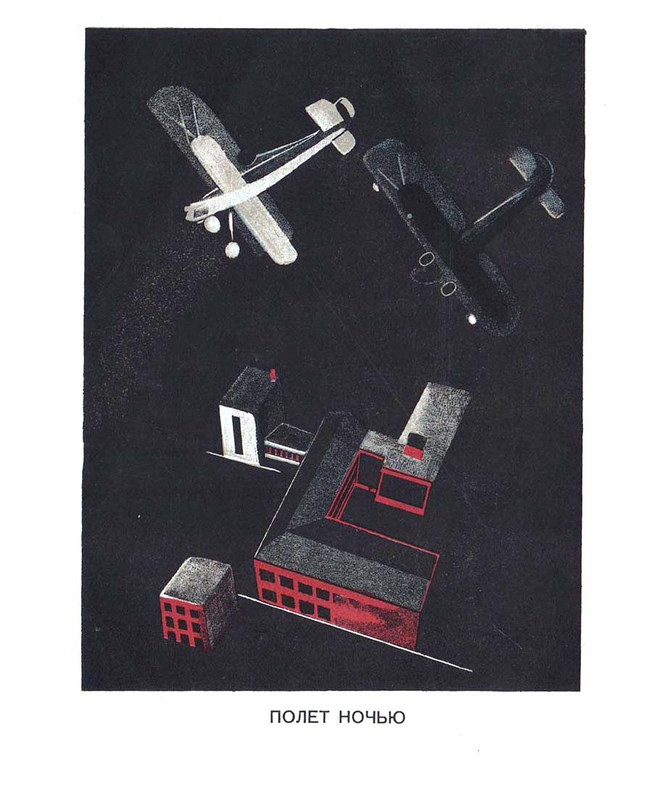
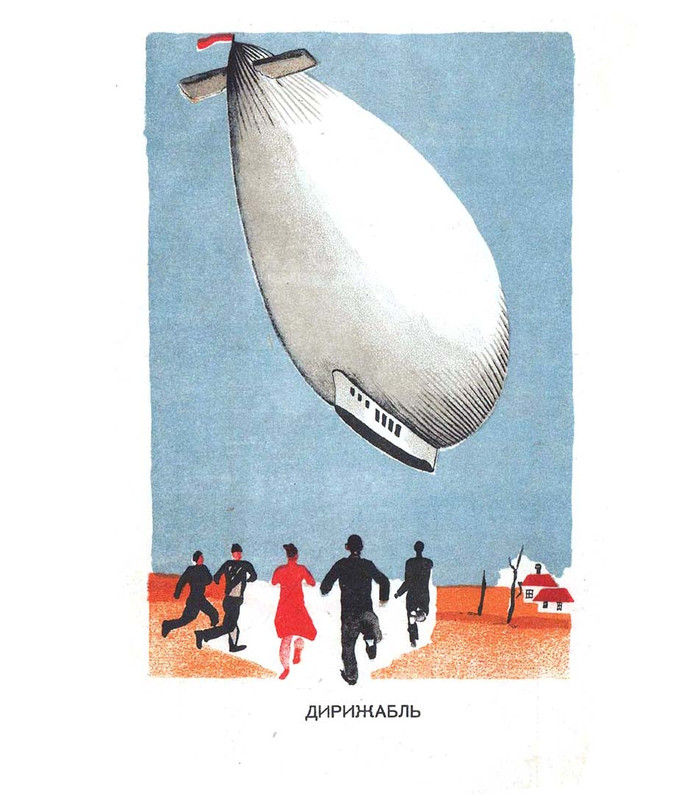
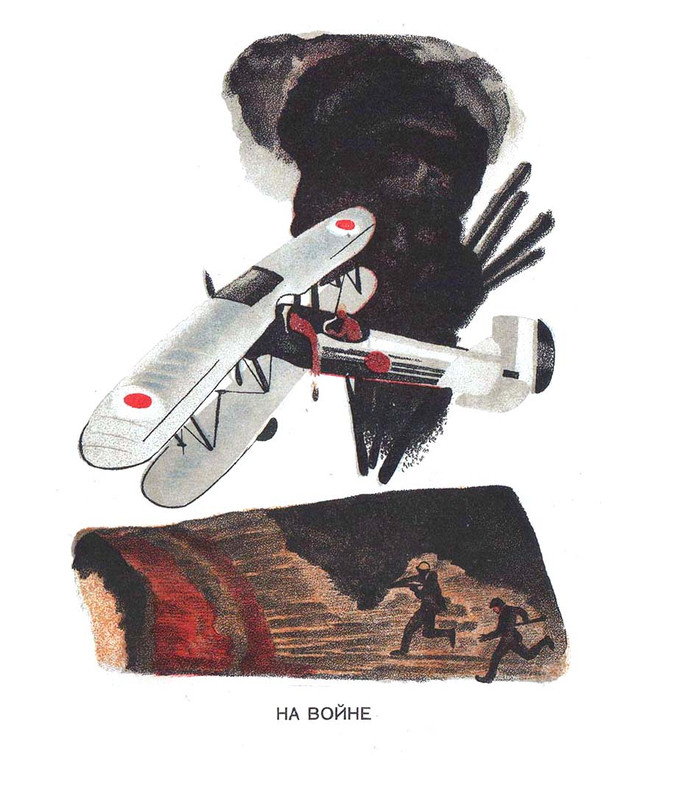
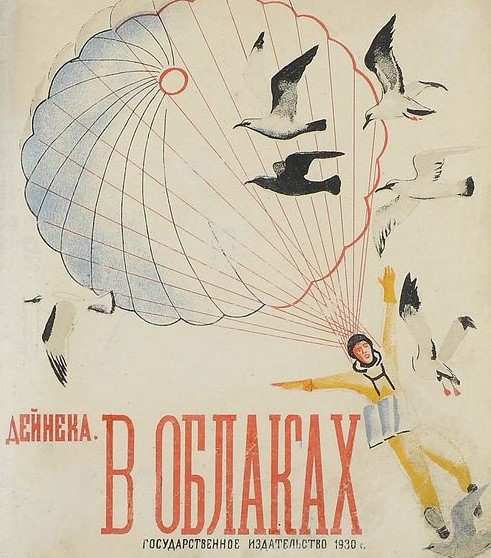 Alexander Deyneka’s In the Clouds was first published in 1930 and later reissued several times. Dedicated entirely to aviation, the book presents readers with a kind of visual catalogue of flying machines and aeronautical equipment, from parachutes to military aircraft. There is almost no text apart from short captions such as “Night Flight”, “Airship” or “Over the Sea” printed in capital letters, so the book reads almost like a thematic album of the artist’s work. Each spread contains two large illustrations, one per page. The compositions are light and spacious, never overloaded with detail. As usual, Deyneka is less interested in the individual or the personal than in the beauty of collective movement and structure: the clear lines of airplane wings, parachute cords, fields, piers, and buildings below create the visual rhythm of the book, where motion itself becomes idealized and therefore strikingly beautiful.
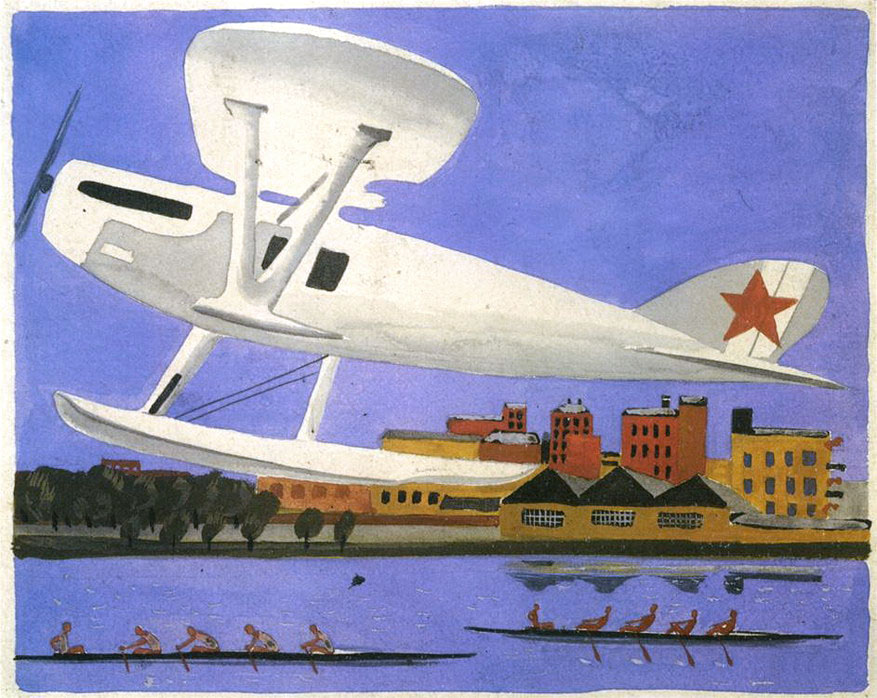
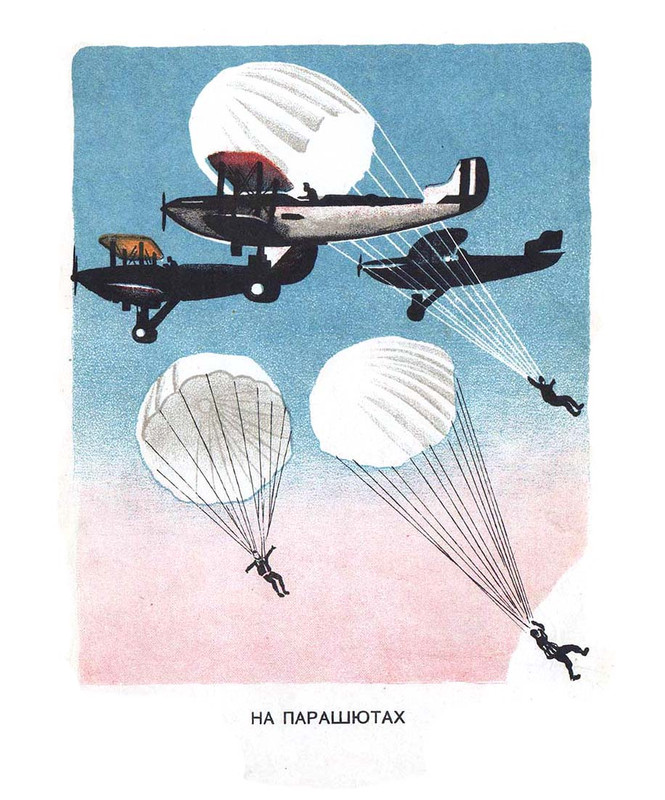
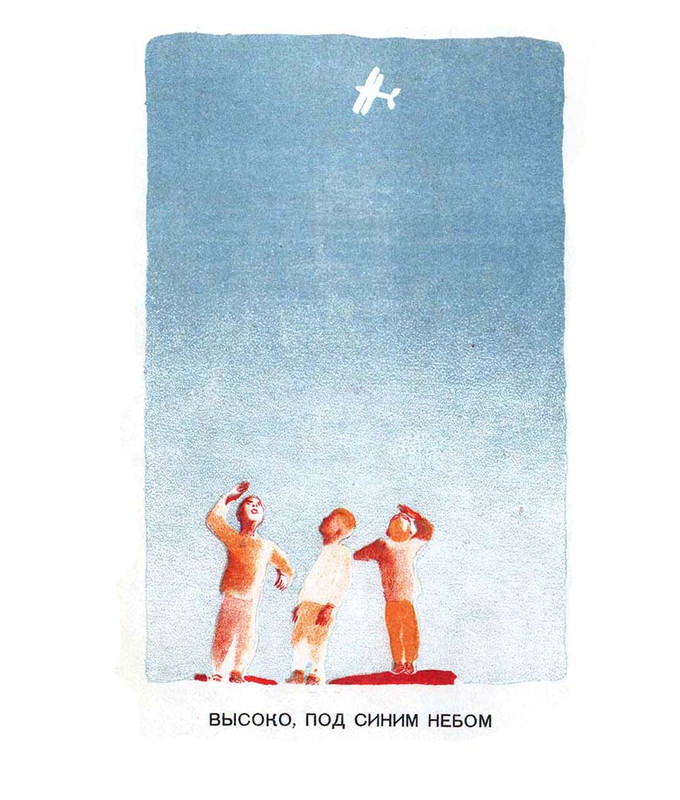
One of Deyneka’s favorite subjects was humanity’s conquest of height, of the third dimension, of the element of air itself. The joy of flight. He boldly constructs unsupported compositions suspended entirely in space, without any visible ground. Fast airplanes race from right to left, while parachutists descend diagonally across the powerful horizontal movement of the aircraft, much more slowly. There are views from above: an airplane flying over constructivist buildings; the sea with tiny boats and beaches far below. There are views from below as well, leading the eye from children standing at the bottom edge of the page to a small airplane high overhead. Deyneka enthusiastically explores perspectives and angles that had previously been almost inaccessible in art: unusual viewpoints, dramatic foreshortenings, shifting relationships between near and distant planes. At the same time, he does not forget the practical uses of aviation, showing everything from crop dusting to war.
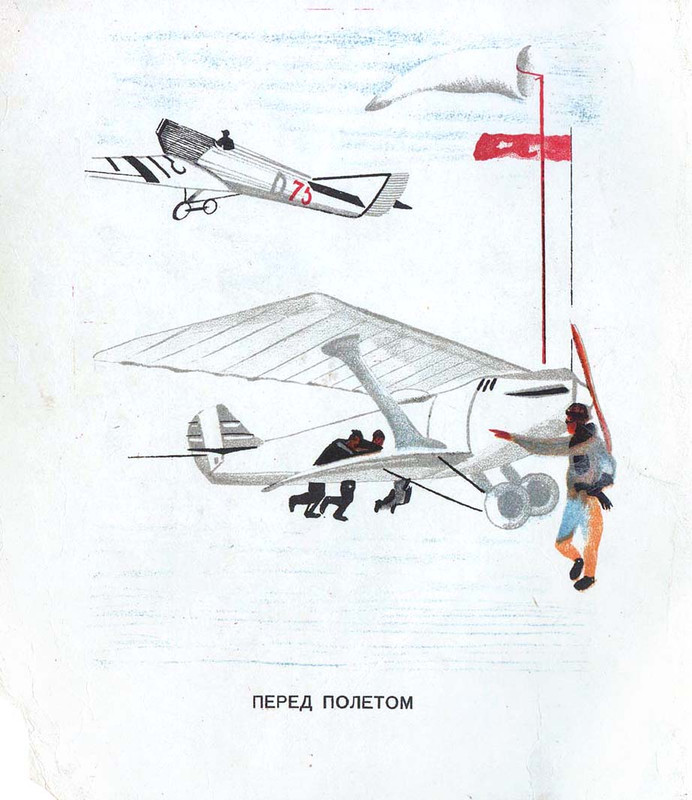
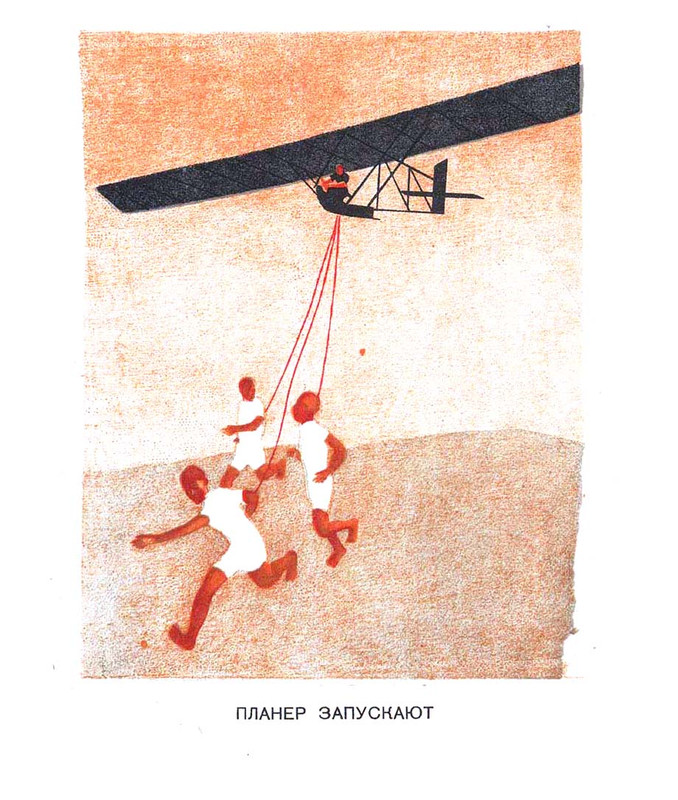
Almost every illustration includes people: pilots preparing aircraft for takeoff, parachutists, one of whom even appears on the cover with arms spread like the seagulls accompanying his flight, or adults and children running after these flying wonders, whether a glider held by a rope or what now looks like an old-fashioned airplane. The palette is limited, with pale blue or pink-yellow skies built around strong contrasts linking the sky and the earth below. Bright figures echo the equally bright airplanes, while the sharp horizon line is repeated in the geometry of buildings and landscapes. Deyneka constantly plays with proportion and perspective. At times we look upward together with children watching a tiny white airplane against the blue sky; at others we seem to hover above the landscape or look ahead from the pilot’s own position.
Art historians often note that the “production books” created by Moscow artists differed significantly from those made by illustrators in Leningrad. While Leningrad artists tended to focus on individual objects, presenting them clearly and accessibly, Moscow artists more often worked with broader themes and more generalized imagery. Deyneka’s book design work is unmistakably connected to his posters, magazine graphics, and monumental painting. Yet his children’s illustrations reveal an unexpected side of his talent. The figures in his paintings are often expressive but heavy and monumental, whereas the drawings in his children’s books feel airy, rhythmic, and remarkably light. During the 1930s Deyneka designed several children’s books in the genre of the “production book,” including Red Army Parade and Boris Uralsky’s Electrician.