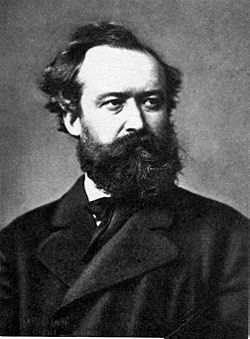
Heinrich Christian Wilhelm Busch (1832–1908) was a German humorist, poet, draftsman, and caricaturist, widely regarded as one of the pioneers of the comic strip thanks to his satirical picture stories that combine text and sequential images.
He was born in the village of Wiedensahl and initially studied mechanical engineering before turning to art. Busch attended art academies in Düsseldorf, Antwerp, and Munich, though he did not complete a formal degree. His breakthrough came with Max and Moritz (1865), a series of mischievous illustrated tales in verse that became a classic of children’s literature and had a lasting influence on the development of comics. Another well-known work is Plish and Plum (1882).
In addition to illustrating his own writings, Busch produced over a thousand paintings, primarily small-format works in oil. Unlike his graphic work, these paintings remained largely unknown during his lifetime and were exhibited only posthumously. Many of them reveal a loose, expressive manner that anticipates elements of Expressionism.
Busch spent much of his later life in relative seclusion and died in Mechtshausen in 1908, leaving behind a body of work that bridges literature and visual storytelling and continues to influence both fields.
Amazon |
Wilhelm Busch
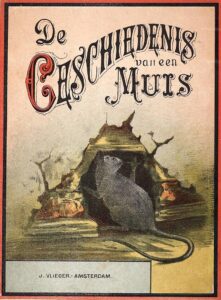
“De geschiedenis van een muis” (The Story of a Mouse) is a work by Wilhelm Busch, originally created in German under the title Die Geschichte einer Maus. It belongs to Busch’s characteristic genre of illustrated stories in verse, where short rhymed texts are closely paired with sequential drawings. The story […]